

It’s Been Like a Roller Coaster and a Whirlwind All In One.
Wrapped up into one. Thus, keeping up with life wasn’t always easy. But life is like that sometimes.
Being diagnosed with cancer in 2025 came with its own highs and lows, along with its set of twists and turns. This diagnosis caught me unaware, and posting articles just didn’t exist.
The lump turned out to be cancer. And doctor after doctor. I test after test. Yes, it has been a roller coaster and a whirlwind, all wrapped up into one. Keeping up with life wasn’t easy.
I mentioned my diagnosis to Dr. Dwight Webster, Sr., and he began to send me affirmations that helped me. I thought I would share them with you.
I hope you feel encouraged by Dr. Webster, Sr.’s words.
He gave me permission to share on my website.
Surrender

Scripture: Matthew 6:10
Reflection: Surrender is not loss; it is trust. When we release control, we make space for God’s wisdom. Lent teaches us that what we place in God’s hands becomes safer than what we clutch tightly ourselves.
Affirmation: I release control and trust God.
Foundation of Faith

Scripture: Hebrews 11:1
Reflection:
Faith anchors what we cannot yet see. It steadies us when clarity is still forming. A faith-centered foundation protects both individuals and relationships from instability.
Affirmation: I remain grounded in faith.
Blessing: May your foundation remain firm and centered in God.
Prayer: Father, root me deeply in You above all else.
Guarding My Mind

Philippians 4:7
Affirmation: I affirm that my thoughts deserve protection. I choose what I allow to shape my thinking.
Prayer: Lord, filter what enters my mind. Renew my thoughts with truth and hope.
Blessing: May clarity guide your thinking. May peace settle in.

Dr. Dwight Webster, Sr., Supervisory Chaplain – Chief Chaplain Service at VA SOUTHERN NEVADA HEALTHCARE SYSTEM.

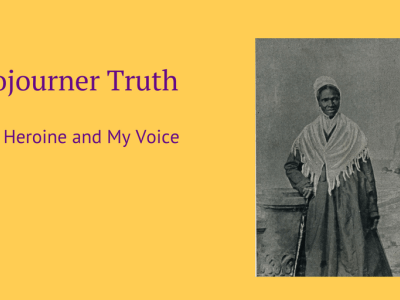
Sojourner Truth-My Heroine and My Voice
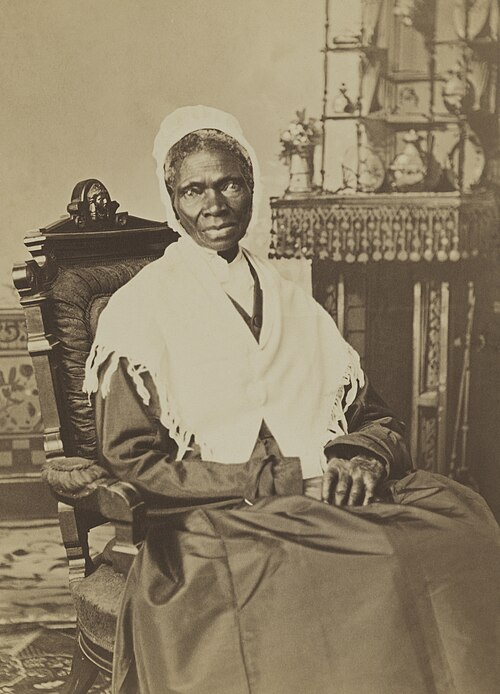
My Heroine, Isabella Baumfree, was born in 1797 to enslaved parents James and Elizabeth Baumfree in Ulster County, New York. After reading about her, it didn’t take long to know she would be my heroine, and it is important to me to reflect as much of her as I can.
“Darlene, you need to find your voice.” Brenda, my coach, explored this idea with me during a session. I love and respect her, but her words were forcing me to confront bringing my emotions into my writing. And emotions aren’t easy for me!
Many writers and speakers talk about ‘finding their voice,’ but this is hard for me. As I pondered, questions like, ‘How and where do I find my voice?’ kept recurring.
My search involved me looking at many writers and websites without any success. What I wanted was a formula: with simple 1, 2, 3 steps, or a method to use. But I found nothing to help me. I continued to think about where to look next and the question, ‘Why do I write and speak?’ This question drew me to another place and time in history.
I thought of the era when women fought for freedom. Freedom for slaves, for voting rights, land, independence, and not like property.
Many women activists in the late 1800s to early 1900s fought for what we enjoy today. One woman, Sojourner Truth. She drew me in. I felt she invited me into her story. She said, “My name is Sojourner Truth,” and she seemed to motion for me to listen.
“Baby, I know what you’re looking for, and I want to give you what I have. The strength and the courage in my voice. The wisdom to know how and when to use my voice, and most of all the willingness to seek God in everything .”
I learned all I could about Sojourner Truth. She was passionate, truthful, strong, and courageous—a woman you’d have to reckon with. Her voice was bold, fearless, and powerful. She embodied traits I admire and a voice I’ve come to love.
In 1851, Sojourner was best remembered for giving the famous speech titled “Ain’t I a Woman” at the Ohio Women’s Rights Convention. Sojourner Truth was winning public opinion. A white publisher altered the text of her speech to make her sound more Southern.
Sojourner Truth, a key abolitionist and women’s rights activist in the 1800s, was born a slave in New York. She lost at least three children to slavery. But she escaped with her infant daughter in 1826. She embraced evangelical religion and joined the reform and abolitionist movements. Her powerful speeches still resonate in the fight for equality. (Editors, 2026)
Sojourner Truth fought for what she believed in. She successfully won the custody of her son and became the first black woman to win a case against a white male. According to a Times Union report, Sojourner Truth was involved in a significant legal case in New York, in which historic court documents detail her efforts to secure her son’s freedom, but there is no evidence that she sued a New York writer for slander and won. Truth is best remembered for her stirring “Ain’t I a Woman?” speech, delivered at a women’s convention in Ohio in 1851. Truth could not read or write; therefore, interpretations were inaccurate. We have no accurate record of her speech. See this link for additional information about Sojourner Truth. https://www.hbook.com/story/reviews-of-select-titles-by-patricia-c-mckissack
Truth spoke about abolition, women’s rights, prison reform, and preached to the Michigan Legislature against capital punishment. Not everyone welcomed her preaching and lectures, but she had many friends and staunch support among many influential people at the time, including Fredrick Douglas, Amy Post, Parker Pillsbury, Frances Gage, Wendell Phillips, William Lloyd Garrison, Laura Smith Haviland, Lucretia Mott, Ellen G. White, and Susan B. Anthony.[63]
Once, a pro-slavery doctor questioned Sojourner’s womanhood and demanded proof. Instead, she exposed her breast to the whole room, declaring, “It is not my shame but yours.” (Liss, 2009) Her confidence met the challenge head-on.
But when I think of Sojourner Truth, I see her confident stature, standing silently and saying, “I dare you.”
After learning about Sojourner, I wondered, “Could I be as strong and as confident as her? Can I find that strength in me?”
Sojourner is an example of strength in the midst of overcoming great pain. She was a woman who deeply cared about the fight that God chose for her.
She endured pain from loss, rejection, love, and injustice before God brought her to the FIGHT. Yet, Sojourner Truth stayed humble, never lost her purpose, and kept her voice strong to the end.
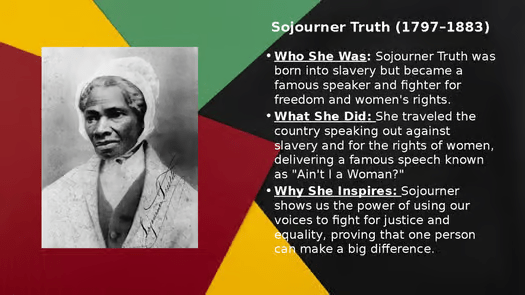
Sojourner Truth made a difference in my life. She motioned me closer as she did from the start, inviting me not only to listen to her voice but to use her voice.
Who is in your life?
- Sojourner has been a mentor, though I never met her. Do you have a Sojourner Truth in your life? You may know your calling, but is God wanting to take you deeper into the calling He has given you?
- Do you have a Brenda who wants to see you be successful in life?
- What does your inner circle look like?
- Are they willing to stand in the gap for you?
These people have been instrumental in my life. Are you pursuing people who encourage and inspire you?
Truth died early in the morning on November 26, 1883, at her Battle Creek home.[64] On November 28, 1883, her funeral was held at the Congregational-Presbyterian Church, officiated by its pastor, the Reverend Reed Stuart.
Frederick Douglass offered a eulogy for her in Washington, D.C. “Venerable for age, distinguished for insight into human nature, remarkable for independence and courageous self-assertion, devoted to the welfare of her race, she has been for the last forty years an object of respect and admiration to social reformers everywhere.”[66][67]
Sojourner Truth’s Legacy (see https://en.wikipedia.org/wiki/Sojourner_Truth}
In 1997, The NASA Mars Pathfinder mission’s robotic rover was named “Sojourner”.[108] The following year, S.T. Writes Home[109] appeared on the web offering “Letters to Mom from Sojourner Truth”, in which the Mars Pathfinder Rover at times echoes its namesake.
In 2014, the asteroid 249521 Truth was named in her honor.[111]
In 2002, Temple University scholar Molefi Kete Asante published a list of 100 Greatest African Americans, which includes Sojourner Truth.[110]
On September 19, 2016, the U.S. Secretary of the Navy Ray Mabus announced the name of the last ship of a six-unit construction contract as USNS Sojourner Truth (T-AO 210).[113] This ship will be part of the latest John Lewis-class of Fleet Replenishment Oilers named in honor of U.S. civil and human rights heroes currently under construction at General Dynamics NASSCO in San Diego, CA.[114]
Resourcestaken from the following websites:
Reviewed in the March/April 1993 issue of The Horn Book Magazine. https://www.hbook.com/story/reviews-of-select-titles-by-patricia-c-mckissack
History.com http://www.history.com/topics/black-history/sojourner-truth+
Hbook.com Patricia and Fredrick McKissackshttp://www.hbook.com/1994/01/authors-illustrators/patricia-c-mckissack-and-fredrick-mckissacks-1993-bghb-nf-speech-for-sojourner-truth-aint-i-a-woman/
Internet Modern History Sourcebook: Sojourner Truth: “Ain’t I a Woman?”, December 1851 http://sourcebooks.fordham.edu/halsall/mod/sojtruth-woman.asp
Isabella Baumfree was born in 1797 to enslaved parents James and Elizabeth Baumfree in Ulster County, New York. https://wams.nyhistory.org/a-nation-divided/antebellum/sojourner-truth/
Sojourner Truth House is a charity http://sojournertruthhouse.org/index.php/about-us/sojourner-truth
Life Story: Sojourner Truth (ca. 1797-1883) https://wams.nyhistory.org/a-nation-divided/antebellum/sojourner-truth/
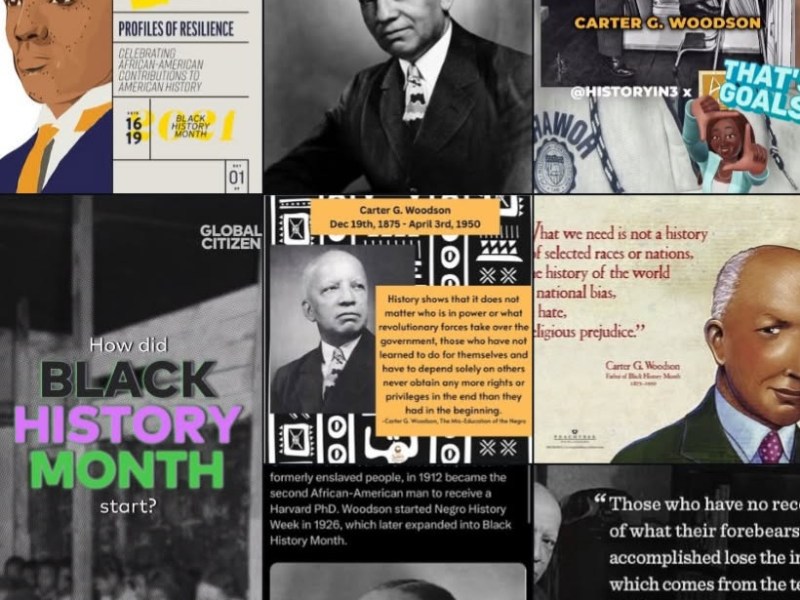
Where it all began-when a Black History Week turned into Black History Month.
Dr. Carter G. Woodson, Advocate, Author, Journalist, and Teacher
Dr. Carter Woodson was a prominent African American historian, author, and journalist, often referred to as the “Father of Black History.” Born in 1875 in Virginia, he dedicated his life to the study and promotion of African American history and culture. He was one of the first scholars to study black history formally and founded the Association for the Study of African American Life and History in 1915. Woodson emphasized the importance of understanding African American history and its role in American history. He also established Negro History Week in 1926, which eventually evolved into Black History Month, celebrated each February. Despite facing racial discrimination and exclusion from mainstream academic institutions, Woodson’s work laid the foundation for future generations of scholars and played a crucial role in the recognition of African American contributions to history.
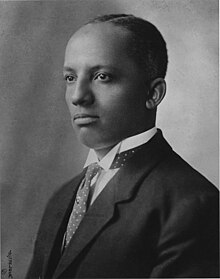
Carter Godwin Woodson (December 19, 1875 – April 3, 1950) was an American historian, author, journalist, and the founder of the Association for the Study of African American Life and History (ASALH). He was one of the first scholars to study the history of the Black African diaspora in the United States. A founder of The Journal of Negro History in 1916, Woodson has been called the “father of Black history.”
Woodson was an important figure to the movement of Afrocentrism, due to his perspective of placing people of Sub-Saharan African descent at the center of the study of history and the human experience.
Rather than seeking acceptance, Dr. Woodson chose independence — a decision that would define his life’s work.
Dr. Woodson was troubled by the direction that history was being taught. It was either denying or minimizing Black’s contributions to history; it was a deliberate use of power.
Woodson did not ask permission to tell the truth. He understood that history is not neutral — it reflects power, choice, and voice. By insisting that Black history be researched, taught, and respected, he changed not only what was known but who was allowed to know it.
Black History Month, at its best, is not a pause from the curriculum, but a challenge to expand it. That challenge began with Woodson — a scholar who refused to let history forget.
Woodson believed and stated, “It is not so much a Negro History Week as it is a History Week. We should emphasise not Negro History, but the Negro in History. What we need is not a history of selected races or nations, but the history of the world void of national bias, race hatred, and religious prejudice.”
Have we reached the goal that Dr. Carter G. Woodson desired?
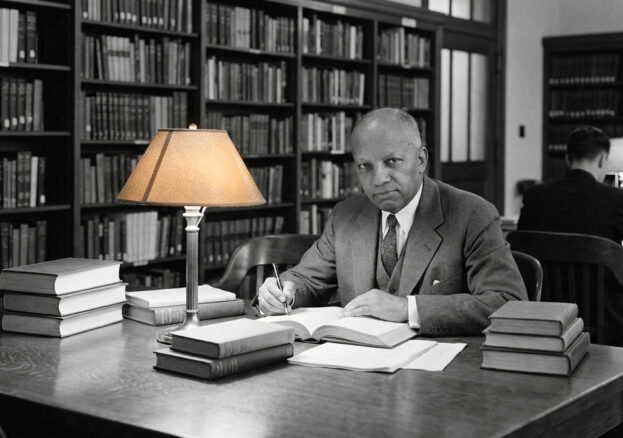
These are some of the takeaways from the article about Dr. Carter G Woodson. I thought they might be worth listing.
1. Dr. Carter G. Woodson is known as the father of Black History Month.
2. Dr. Woodson’s Work challenged mainstream narratives and promoted the study of Black history.
3. His legacy continues to influence how Black history is taught and understood.
References-
Carter Godwin Woodson – https://en.wikipedia.org/wiki/Carter_G._Woodson
Dr. Carter G. Woodson: The Historian Who Refused to Let History Forget – https://www.blackhistorymonth.org.uk/article/section/opinion/dr-carter-g-woodson-the-historian-who-refused-to-let-history-forget/
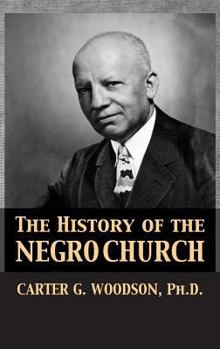
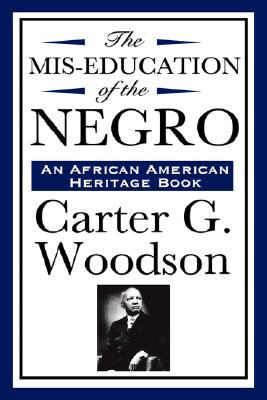
Woodson wrote 51 books, excluding contributions to anthologies. And 34 non-fiction books, 15 books in the Journal of Negro History Series, and 1 book in the Oshun Publishing African-American History Series.


What We Get Wrong About Forgiveness – and Why It Matters
Last year, on a flight, I ended up next to someone I knew who told me they had been thinking about me. They were struggling with a painful situation and were waiting and hoping for an apology from someone who had hurt them. That apology never came. As we talked, I was reminded how often people feel stuck in their pain simply because they believe forgiveness depends on the actions of someone else. It doesn’t.
I teach a course on interpersonal forgiveness at the University of Northern Iowa, and one of the most common misunderstandings my students bring into class is the belief that forgiveness requires an apology. While apologies can make forgiveness easier, they aren’t necessary, and often, they don’t appear. More importantly, they are completely outside the injured’s control.
A second major misconception is that forgiveness automatically leads to reconciliation. Many people avoid forgiving because they fear it means resuming a relationship with the person who harmed them. But forgiveness and reconciliation are separate. Forgiveness is something you can do on your own; reconciliation requires trust, safety, and meaningful change from the offender. You can forgive someone without ever speaking to them again.
One aspect of forgiveness many people never consider is that forgiveness is a moral virtue. To forgive is not just to let go of anger; it is to recognize the humanity of the person who hurt us. This does not mean excusing harm or minimizing our pain. Instead, it involves “reframing” or looking at the situation with new eyes and understanding that people are more than their worst behaviors.
Reframing helps us expand our perspective: What might have been happening in the offender’s life? What pressures, insecurities, or past wounds may have shaped their choices? These reflections don’t excuse or erase the offense, but they deepen our understanding of how the harm occurred. As I often tell the fifth graders I work with, “It’s easy to be kind to people who are kind to us. It’s harder to be kind to people who aren’t. That’s radical kindness” or, as the fifth graders like to call it, “raging kindness”.
Forgiveness is one path toward healing. It involves acknowledging our pain, expressing our anger and other uncomfortable emotions in healthy ways, and gradually developing empathy for the offender, not because they deserve it, but because holding onto resentment often prolongs our suffering. When we forgive, we put goodness and compassion into the world in a way that can transform us, the offender (sometimes), and the greater community.
What forgiveness does not mean is forgetting the offense, pretending it didn’t happen, or abandoning justice. Forgiveness and justice can co-exist. You can forgive someone and still hold them accountable.
Forgiveness is not quick or easy. It takes time, courage, and emotional effort. It requires facing our hurt rather than avoiding it. But it is possible, even without an apology, even without reconciliation, and even when the other person never knows we forgave them.
One of my online students captured this well when they wrote: “Forgiveness is a process, and it takes practice to perfect it. I love golf, and it is very challenging, but I won’t succeed without understanding how it works and practicing it. The same thing goes for forgiveness… if you understand the process and what forgiveness means, it will be a lot easier to do and you will ultimately be more successful in doing so” (personal communication, November 2023).
Forgiveness can be harmful when one is pressured to forgive for any reason. When freely chosen, forgiveness is a form of self-care and moral growth, that includes self-respect and compassion, not duty or obligation. When viewed as a moral process that includes choice, emotional healing, and empathy for the offender, forgiveness is a powerful tool for resilience, healing, and care for others
If you’d like more resources on forgiveness or the forgiveness process, feel free to contact me at freedman@uni.edu.
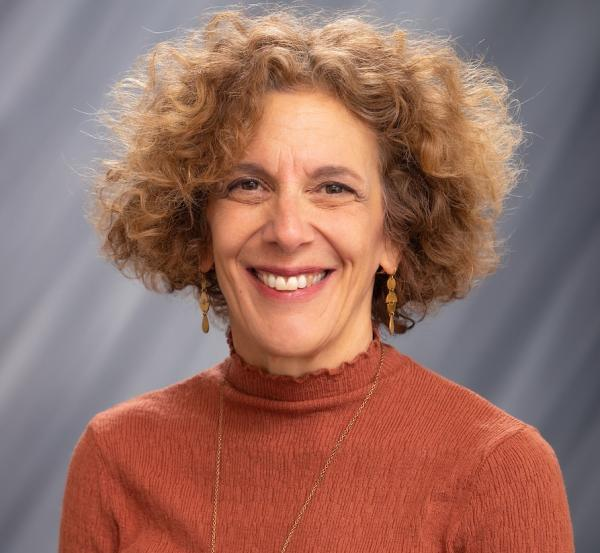
Thank you, Dr. Freedman, for entrusting me with your insightful words. Sharing your article presents an exceptional opportunity,
Des Moines Register.
The above article was contributed to the Des Moines Register by Dr. Freedman.
Dr. Freedman is a Professor in the Educational Psychology, Foundations, Educational Foundations, and Professional Experiences Department at the University of Northern Iowa in Cedar Falls, Iowa. She earned her Bachelor of Arts degree from the University of Delaware and both her Master’s Degree and Ph.D. from the University of Wisconsin-Madison. She studied under and conducted research with Dr. Robert Enright, whom Time Magazine called “the forgiveness trailblazer.” Her dissertation was a landmark study that was published in the Journal of Consulting and Clinical Psychology on Forgiveness with Incest Survivors.
Dr. Freedman’s areas of expertise include the psychology of interpersonal forgiveness, forgiveness education and intervention, moral development, incest and sexual abuse, and early adolescent development. She has presented at numerous national and international conferences on the psychology of interpersonal forgiveness. At the University of Northern Iowa, she teaches a variety of developmental psychology courses, including the Psychology of Interpersonal Forgiveness.

WHAT IS YOUR PURPOSE IN LIFE?
Some say a life without purpose is no life at all! It could be about living without restrictions or simply pursuing one’s desires. But I can say, I do not want to die, never accomplishing the purpose God had when He created me! So, what is your purpose in life?
Discovering my purpose
I never really thought about my purpose in life or how it would manifest itself after becoming a victim of sexual assault. Having someone to care enough to encourage you because of what they see in you is fantastic. Other people see us differently from the way we see ourselves. I wanted to hide after that horrible experience. Becoming a volunteer was the furthest thing from my mind, but not from the purpose God had in store for me.
I still question myself. Could I help someone who was hurting? Would the survivor be willing to get help from a Black volunteer, especially if a Black person was the assailant? So many thoughts crossed my mind.
But now, I have 25 years of experience in the crisis prevention industry. Volunteering is where I embraced my calling to serve. It is funny how God works.
My role as a volunteer
- Accompanied the survivor through a medical examination and an interview by the police.
- Walked the survivor through the court process if the case went to court.
- Joined the speaker’s bureau, where students learn about sexual assault and how it changes lives.
- Spoke with community members, the city council, and churches.
- Walked victims through their exams and the police interview.
I left this area where I volunteered, but by then, I knew I was to start a ministry that would support the abused. I was not sure how this would play out, but that was the task set before me.
I could not quit now even if I wanted to; this is one of the signs you see when looking for your calling.
My leap of faith
As a result of my leap of faith into my purpose, I have achieved the following:
- Darlene J. Harris: Speaking from the Heart Ministry
- Leader of the Women’s Ministry at Community Bible Church, overseeing 400 women.
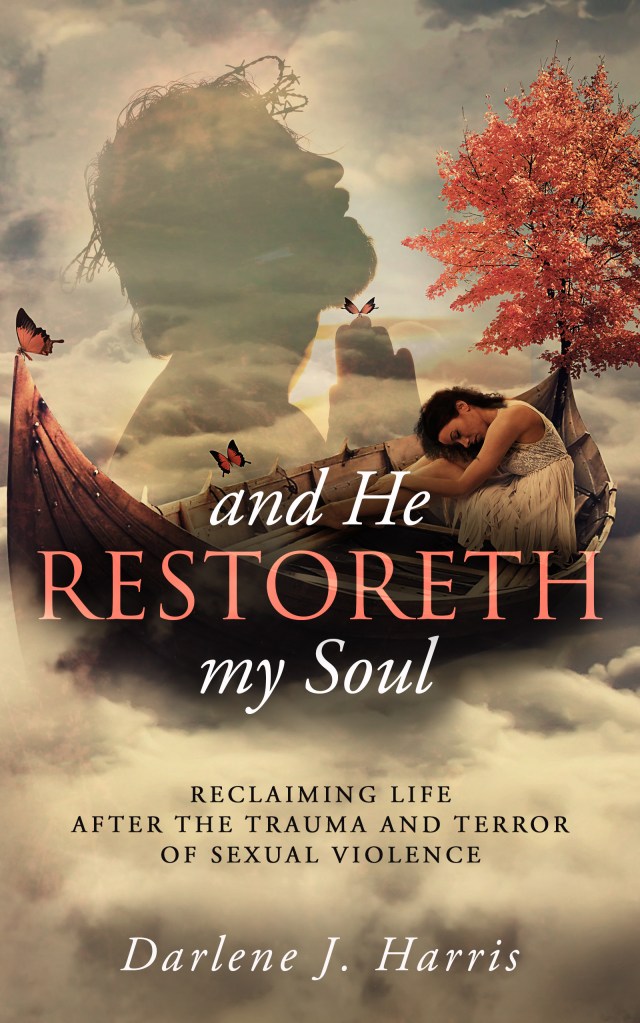
- Author of And He Restoreth My Soul, an anthology with over 30 people participating. Professional Interview with The Ventura County: L.A. Times.
- Professional interview with the California radio station KKLA.
- Organizing and developing retreats and workshops for various women’s ministries.
- Started “Cura Ministry” for domestic violence in my church.
It does not take a horrendous act such as rape for one to discover a purpose in life, but God needed someone for this purpose. It was me!
Romans 28 (NASB)And we know that God causes all things to work together for good to those who love God, to those who are called according to His purpose.
Resource
https://www.biblegateway.com/passage/?search=Romans%208%3A28&version=NASB

What does healing really look like?
Speaking from my own experience as a survivor of childhood sexual, spiritual, and physical abuse, this is an essential question for me. Ever since I realized I had baggage I needed to deal with, I’ve thought many times about this question. I’ve been in what I consider the recovery process for a long time. And now and then, I feel like I’ve achieved some breakthrough. I would sigh and say, “Finally, that’s over. Now I can move on.” Only to discover that this onion has another layer that needs to be peeled back and dealt with.
It was disappointing, and that’s putting it mildly. I would cry, be angry, and irritable, or both. Finally, I accepted that the journey must continue and embraced this new issue with resolve and determination, albeit reluctantly.
Once again, I would ask God, myself, and whoever was available, how long it would be before I am healed?
And that’s the thing. We all want a quick fix. But we didn’t get this way overnight. I sure didn’t. I suffered for decades from abuse, and those decades came with consequences. Not only do I need to deal with the damage to me. I also need to work through the damage I caused others. Which, at times, seems worse.
So, here’s what I think. It’s kind of like this. Children are like wet cement. They come out each with their own bent. As parents, we try to shape that bent to be as straight as possible. So, for their own sake, they can live reasonably happy lives as adults. The cement is pretty smooth, and any defects are hardly noticeable. But sooner or later, as in my case, something or someone damages the surface. Maybe a kid rides his bike across it, leaving deep tracks. Some uncaring individual just stomps through it with combat boots.
Who knows, but the point is the surface gets gouged out. Now, using that same analogy, when the children are young, the cement is still wet or hasn’t completely set. It can be smoothed out and leveled, and you can hardly notice that anything was ever bent. But! If you wait too long, it will be a lot of work to sandblast the edges. It will also take a lot of effort to fill in the cracks. Even then, it is evident to the casual observer that damage has been done. And if left untreated, the surface will be challenging to navigate.
So, back to the original question. If I’m so messed up, and nothing has been done to help me. Now that I’m 40 years old, I can’t understand why nothing seems to work in my life. What do I do?
Well, there are drugs, alcohol, and sex, which will only make things worse and make me unbearable. Or, there’s therapy. It can help me understand why I am the way I am. Therapy can also give me some healthy options to compensate for my issues.
But that only works with behaviors. I want to heal. To do that, I need to tackle the whole person: body, soul, mind, and spirit. The body can be addressed with sleep, exercise, and healthy nutrition. The soul needs to deal with the innate bent toward self. The mind must adjust its attitude toward life and other relationships with work and play in the community. But I suspect the spirit is where some real progress toward healing can happen. Let me explain why.
As I’ve mentioned before, we come into this world with a natural bent toward selfishness and rebellion. No, you say? Then you have never tried raising a child. You never have to teach a child to be selfish, stubborn, greedy, or lying. But you do have to teach them to be unselfish. You must teach them to be more cooperative. They need to show compassion to others. It’s essential to teach them to be honest and truthful.
This part is the human heart or spirit. It has to be healed first, and then the rest is so much easier to encourage.
I grew up being taught about God, love, and forgiveness. While I was being abused, I never forgot how to connect with God. He helped me through the horrible times because I kept coming back to the truth of God’s love for me. The Holy Spirit kept urging me toward better attitudes. He encouraged me to adopt healthier behaviors. Despite all of this, I tended to deal with the damage in unhealthy ways.
So, here I am today. I still have all the scars. I can point to all the damage and its effects on me. But yet there is a peace about it. I have all the memories still. But the sting of them is gone. I view them as photographs of different moments in my life. Sometimes there is sadness. Sometimes there is regret. But there is no wish to medicate with substances or unhealthy behaviors anymore. I’ve made peace with as many as I can. I’ve made peace with myself. I’ve made peace with my abusers. My anger has subsided to a manageable level now.
Sometimes I can still be triggered by something I’m watching or reading. Sometimes it’s a person whose actions or words can affect me. But my reactions are better controlled, and I know what is happening and why.
I’m still me, just different and comfortable in my skin at last. Am I the person I’ve always wished to be? No, not at all, and that’s okay. I’m loved and accepted, and I know I’ll be OK. I have a wife who sometimes doesn’t like me but loves me, knows me, and accepts me, flaws and all. For me, that’s as good a definition of healing as I have hoped for.
Just my thoughts.
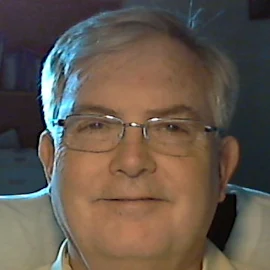
Roger Mann draws from his own journey to help others navigate the challenges of trauma and addiction. Roger has over 45 years of experience in the medical field. He brings both professional knowledge and personal insight to his work. Through compassion and lived understanding, Roger supports people in finding hope and building healthier futures. His mission is driven by a belief in the power of resilience and the possibility of transformation.
Do you have a question, I might have an answer!

Living Out My Faith
“Your faith can make an impact. God can use your faith and good reputation to draw others to Himself. Pray that God would do this in your life, giving you boldness and helping you live out your faith in a way that is seen by others, and that leads to His praise.”
— The Power of the Gospel: A Year in Romans by R.C. Sproul
Most of you do not know that I was diagnosed with breast cancer in March of 2025. And have you heard God’s Spirit speak to you, telling you it is cancer, but you will be all right?
The one thing I knew was if He was speaking that loud to me, I should listen. It is not like I had not heard that voice before. He walked with me every step of the way. When something new was about to happen, His Spirit was right with confirming His word!
I wanted to represent God’s power in everything that happened to me and in me. I have failed, so don’t be misled. But when I hear his voice that clear. Obedience is the goal, as it was all the other times. Furthermore, I have not had cancer before, so I needed to listen and follow!
People who were close to me knew what I was going through. They commented on how well I was handling everything without complaining. Even the doctor commented. I still had a good sense of humor. These comments meant everything to me.
Because it meant I knew it was God and not me. It also meant that I did not betray the prayers of many people.
I feel good! I’m ready to get back to some of the things I love doing. Most importantly, I will remember this. When we exclaim, “Have faith and believe in God,” we do not know the impact our words have. And we do not know who is watching.
I’m glad to share my heart with you in hopes that you will remember someone is always looking.
Darlene J. Harris
Serving at His Pleasure

All is Forgiven
Ernest Hemingway once wrote a short story called “The Capital of the World.”¹ In it, he told the story of a father and his teenage son who were estranged from one another. The son’s name was Paco. He had wronged his father. As a result, in his shame, he had run away from home.
In the story, the father searched all over Spain for Paco, but still, he could not find the boy. Finally, in the city of Madrid, in a last desperate attempt to find his son, the father placed an ad in the daily newspaper.
The ad read: “PACO, MEET ME AT THE HOTEL MONTANA. NOON TUESDAY. ALL IS FORGIVEN. PAPA.”
The father in Hemingway’s story prayed that the boy would see the ad; and then maybe, just maybe, he would come to the Hotel Montana. On Tuesday, at noon, the father arrived at the hotel. When he did, he could not believe his eyes.
An entire squadron of police officers had been called out in an attempt to keep order among eight hundred young boys. It turned out that each one of them was named Paco. And each one of them had come to meet his respective father and find forgiveness in front of the Hotel Montana.
Eight hundred boys named Paco had read the ad in the newspaper and had hoped it was for them. Eight hundred Paco had come to receive the forgiveness they so desperately desired.
¹The above is one of the short stories written by Ernest Hemingway in the book “The Capital of the World.”

The author continued his forays into Africa and sustained several injuries during his adventures, even surviving multiple plane crashes.
In 1954, he won the Nobel Prize in Literature. Even at this peak of his literary career, though, the burly Hemingway’s body and mind were beginning to betray him. Recovering from various old injuries in Cuba, Hemingway suffered from depression and was treated for numerous conditions such as high blood pressure and liver disease.
He wrote A Moveable Feast, a memoir of his years in Paris, and retired permanently to Idaho. There he continued to battle with deteriorating mental and physical health.
Early on the morning of July 2, 1961, Ernest Hemingway committed suicide in his Ketchum home.
Legacy Hemingway left behind an impressive body of work and an iconic style that still influences writers today. His personality and constant pursuit of adventure loomed almost as large as his creative talent. Biography of Ernest M Hemingway
Do not copy. Used only for spiritual educational enlightenment.
Do you have a question, I might have an answer!
The Role of Emotional Validation in Apologies and Forgiveness
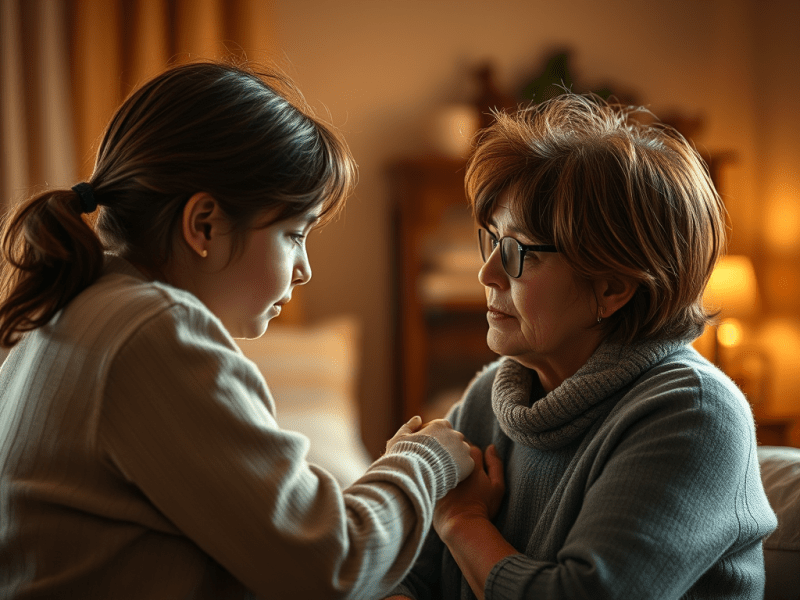
I did something to hurt my daughter the other day. It was unintentional, but she was angry and hurt, and she had a right to her feelings. When she shared her emotions with me, I realized that my actions were wrong. I felt bad about what I had done; I apologized and assured her that it would not happen again. However, I apologized immediately after she expressed her anger, while she was still upset. Fortunately, through my study of forgiveness and the psychological process of forgiving for over 30 years, I understand that forgiveness is not instantaneous.
Although I wanted my daughter’s forgiveness, I knew expecting it right away was neither fair nor realistic. People often apologize and expect immediate absolution before the injured person has processed their emotions. Many individuals who say, “I forgive you” upon receiving an apology later discover they do not feel that forgiveness in their hearts. This is because genuine healing requires time, not just words.
One of the most overlooked aspects of apologizing is allowing the hurt person time to work through their emotions. Expecting immediate forgiveness disregards the necessary emotional processing that follows a deep, personal, and unfair injury (Smedes, 1996). Emotional reactions to conflict and personal injury are normal and natural, and those who have been hurt need time to feel and express their emotions. As a student in my college class on interpersonal relationships stated, “Forgiveness is not immediate—you cannot just say ‘I forgive you’ and expect everything to be better. Especially if saying it is not true—saying it just to stop talking about it does not make it better for you or them. Yet, I see it all the time, and people wonder why their relationships/friendships are never the same. There are steps you can take to forgive someone, even if you never forget what happened or your relationship isn’t the same” (personal communication, March 2025).
A sincere apology involves emotional validation—the acknowledgment of another person’s feelings as real and important. Research shows that interpersonal hurt often evokes a mix of emotions, including resentment, anger, and/or sadness (Freedman & Zarifikar, 2016). If these emotions are dismissed—such as when an offender urges the injured to “move on” or “let it go”—it can lead to emotional suppression or denial rather than genuine healing (Gregory, 2025). Admitting and expressing feelings is a critical step before forgiveness can occur, as emphasized in the first phase of Enright’s (2001) process model of interpersonal forgiveness. Forgiveness is often criticized because individuals fail to recognize this critical step in the forgiveness process and mistakenly believe that forgiveness involves the suppression or denial of one’s emotions (Freedman & Zarifkar, 2016).
I knew that allowing my daughter to feel, express, and process her emotions was just as important as my apology. By validating her anger rather than dismissing it or pushing her toward forgiveness, I communicated that her pain mattered. This act of validation fosters an environment where forgiveness can develop naturally over time. Parents often struggle when they see their children in pain and may react by suggesting they quickly move past the hurt. However, individuals need time to experience and process their emotions before they are ready to move forward. According to Damour (2020), when teens can sit with their feelings and then move beyond them, they develop resilience, realizing they can endure difficult emotions.
Pressuring someone to forgive before they are ready can lead to resentment, emotional dissonance, and distrust in the forgiveness process (Worthington, 2006). Instead of fostering healing, forced forgiveness creates obligation, often resulting in superficial reconciliation (Freedman & Chang, 2010). My college students frequently report that they remember being told in childhood to forgive after receiving a forced apology, despite still feeling hurt. Similarly, offenders are often encouraged to apologize before they truly feel remorse. Genuine forgiveness and apology cannot be demanded—it must arise from within.
In my situation, if I had I expected my daughter to forgive me immediately, she might have felt pressured rather than supported. This could have led to resentment or suppression of her emotions instead of real healing. By giving her the space she needed, I conveyed that her emotions were valid. As Damour (2020) explains, psychological health is not about avoiding discomfort but about experiencing the appropriate emotion at the right time and developing the capacity to endure it.
Conclusion
Forgiveness is a process, not a transaction. While an apology is a critical step in making amends, it does not guarantee immediate and automatic forgiveness. Emotional validation plays an essential role in healing by acknowledging the injured person’s emotions rather than rushing them towards resolution. Additionally, while an apology is not necessary for forgiveness to occur, it is often important for reconciliation and can make forgiving easier. However, requiring an apology before forgiving can leave the injured trapped in resentment, waiting for an apology that may never come (Freedman, 1998).
My experience with my daughter reinforced a fundamental truth—forgiveness cannot be rushed or forced. Healing requires time, understanding, and the space to process emotions fully. By allowing my daughter to work through her pain without pressure, I honored her emotional experience and our relationship, fostering the conditions for true forgiveness to emerge.
Dr. Suzanne Freedman, Professor, Co-chair of the College of Education Diversity, Equity & Inclusion Committee, University of Northern Iowa.
Dr. Freedman is a Professor in the Educational Psychology, Foundations, & Leadership Studies department at the University of Northern Iowa in Cedar Falls, Iowa. She earned her Bachelor of Arts degree from the University of Delaware and both her Master’s Degree and Ph.D. from the University of Wisconsin-Madison. She studied under and conducted research with Dr. Robert Enright, whom Time Magazine called “the forgiveness trailblazer.” Her dissertation was a landmark study that was published in the Journal of Consulting and Clinical Psychology on Forgiveness with Incest Survivors.
Dr. Freedman’s areas of expertise include the psychology of interpersonal forgiveness, forgiveness education and intervention, moral development, incest, and sexual abuse, and early adolescent development. She has presented at numerous national and international conferences on the psychology of interpersonal forgiveness. At the University of Northern Iowa, she teaches a variety of developmental psychology courses, including the Psychology of Interpersonal Forgiveness.
A Trip Down Recovery Road
When darkness fades, and light begins
To seep into the soul’s deep wounds within
You’ll know you’ve stepped into recovery’s gate
Where healing blooms, and a new path awaits
Your eyes, once dim, now shine with hope
As fears and doubts began to creep in
The weight that pressed upon your chest
Began to lift, and you can finally rest
Your voice, once silenced, now speaks clearly
As you reclaim your story, year by year
The shame that bound you starts to unwind
As self-compassion and love entwine
Your heart, once broken, starts to mend
As forgiveness and self-care become your friend
The world, once overwhelming, now feels kind
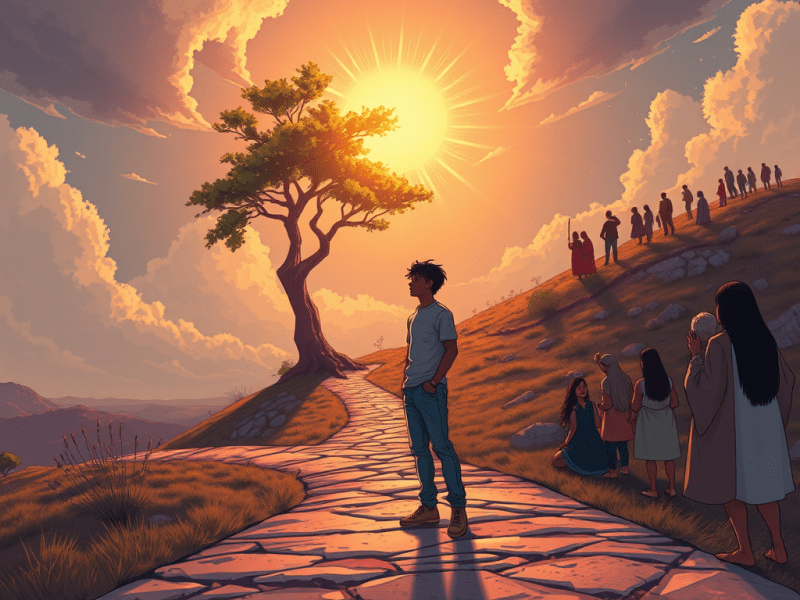
As you learn to navigate, one step at a time
You’ll notice changes, subtle yet grand
A sense of peace, a newfound land
Where self-awareness and growth entwine
And the beauty of life becomes divine
Recovery’s journey is not always predictable
But with each step, you’ll find you’re stronger and clearer
So hold on to hope, and don’t let go
For in recovery’s light, your true self will glow.

Dr. Princess Olufemi-Kayode
Ashoka Fellow | IVLP Alumnipert / Gender Professional
Dr. Princess Olufemi-Kayode is a compassionate poet, advocate, and champion of human dignity. Her writing reflects deep values of collaboration, integrity, and uplifting others, while her life’s work is dedicated to empowering individuals, particularly survivors of gender-based violence. With a steadfast commitment to helping others rebuild and thrive, she celebrates the unique skills and resilience within everyone, inspiring positive change and collective action through her words and deeds.
If you want to know more about Dr. Princess, you can find more information on these platforms: YouTube Media Concern Initiative, The Nation Newspaper, Facebook, Amazon Author, and Wikipedia


HOPE Against all HOPE Abraham Believed
I love these scriptures because I love God, who is my hope. I believe God can fulfill His promises, which are tailored to our needs. I trust His word.
I hope you have a favorite verse to hold onto during tough times. I have a few, and I hope you do too. A favorite verse is like grasping God’s steady hand. This is HOPE and belief!
…17 As it is written: “I have made you a father of many nations.” He is our father in the presence of God, in whom he believed, the God who gives life to the dead and calls into being what does not yet exist.
18 Against all hope, Abraham in hope believed and so became the father of many nations, just as he had been told, “So shall your offspring be.”
19 Without weakening in his faith, he acknowledged the decrepitness of his body (since he was about a hundred years old) and the lifelessness of Sarah’s womb.…
Context from: Benson Commentary, Romans 4:18-22.
Image – Abraham produced by AI
How did black music affect American culture?
The impact of African-American music on American culture
Describing the African-American influence on American music in all its glory and variety is an intimidating – if not impossible – task. African-American influences are so fundamental to American music that there would be no American music without them. People of African descent were among the earliest non–indigenous settlers of what would become the United States. The rich African musical heritage they carried with them was part of the foundation of a new American musical. culture that mixed African traditions with those of Europe and the Americas. Their work songs, dance tunes, and religious music contributed to American music. The syncopated, strong, remixed rock and rap music from their descendants also had a significant influence. These forms of music became the lingua franca of American music. They eventually influenced Americans of all racial and ethnic backgrounds. The music of African-Americans is one of the most poetic and inescapable examples of the importance of the African-American experience. to the cultural heritage of all Americans, regardless of race or origin.
How did black music affect American culture?
African-Americans and the musical culture they brought to this country developed within the bonds of slavery. Despite the adversities, the music they created, particularly the blues, would be the most far-reaching. Its influence is felt in everything from Jazz to rock, country music to rhythm and blues, and classical music.
Why was music important to enslaved Africans?
Music was a way for enslaved people to express their feelings, whether it was sorrow, joy, inspiration, or hope. Songs were passed down from generation to generation throughout slavery. African and religious traditions influenced these songs and would later form the basis for what is known as Negro spirituals.
What is the history of black music?
African-American music is an umbrella term covering various music and musical genres primarily developed by African Americans. These musical forms originated from the historical conditions of slavery. This period characterized the lives of African Americans before the American Civil War.
What is black culture?
African-American culture, also known as black-American culture, refers to the contributions of African-Americans to the culture of the United States. Either as part of or distinct from mainstream American culture.
How did Jazz influence American culture?
Throughout the 1920s, jazz music evolved into an integral part of American popular culture. The primitive jazz sound that originated in New Orleans diversified and thus appealed to people from every echelon of society. Fashion in the 1920s was another way jazz music influenced popular culture.
What was the purpose of Negro spiritual to slaves?
Negro spirituals communicated many Christian ideals while also communicating the hardship that was a result of being an African-American slave. The spiritual was often directly tied to the composer’s life. It was a way of sharing religious, emotional, and physical experiences through song.
What are some musical styles from the United States that African traditions have influenced?
African traditions have influenced several styles. These include blues and gospel. Jazz, country music, R&B, and soul are also influenced. Other styles include rock, metal, and punk hip-hop. African traditions have also influenced niche styles and Latin American music.
African-American music is crucial in American history and culture. Exploring its history and impact is a key part of the mission of the National Museum of African-American History. Culture Music occupies a unique place in the museum. From civil rights struggles and religious ceremonies to social commentary and community building.
The most distinctive features of African-American musical traditions can be traced back in some form or another to Africa. Many expressive performance practices are seen as synonymous with African-American music, including blue notes. These techniques have roots initially developed in Western and Central Africa. They arrived in the United States via the middle passage. Over the centuries, African-American musicians have drawn on the ancestral connection to Africa as a source of pride and inspiration. One of the most evocative illustrations of this connection is a wooden drum initially used in the sea islands off the coast of South Carolina, probably in the 19th century. As an American manifestation of an African musical tradition, the drum illustrates one of many ways that African culture persisted in the United States, even during the long night of slavery.
Hybridization
African-American music is a hybrid of various musical traditions. Although African elements remain strong, it combines the musical traditions of Africa, Europe, and Native American cultures. There are also influences from around the world. This process, which began in the 17th century with the arrival of the first enslaved Africans at Jamestown, continues into the present as black musicians draw on diverse influences to create new sounds. It is this hybridize that makes African-American music a distinctly American phenomenon. In the 19th century, the creation of the banjo is a vivid example of the fusion of African and European musical traditions that African Americans created in America.
The banjo was one of the most critical instruments in early African-American music. Though seldom associated with African-Americans in contemporary popular culture, it is a classic example of how African-Americans blended African and European musical traditions in the United States. The earliest banjos were likely based on West African lutes. Over centuries, banjo makers gradually adapted their instruments to conform to European tuning systems. Thus, a truly American instrument incorporated Western music theory even as its design recalled its African models.
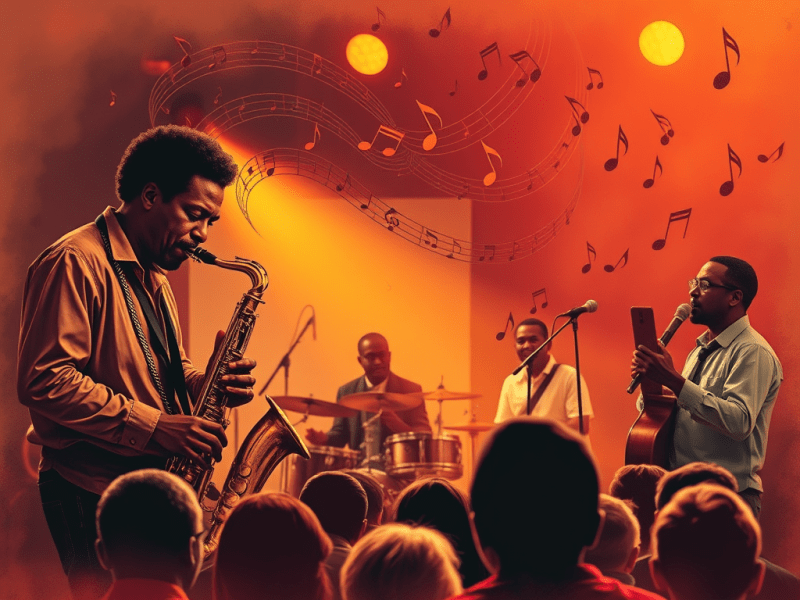
Jazz is another iconic example of African-American musical hybridize. It occupies a central position in the musical influence on American culture. In the late 19th century, African-American musicians combined popular songs and marches with African-American folk forms like Ragtime, sacred music, and the blues to create a new form of heavily syncopated and improvisatory music. Thus, the music is called Jazz. And it occupies a central place in America’s cultural heritage, which many fans and scholars call “America’s classical music.”
America is truly a melting pot of cultures. The influence of African American music has played a prominent role in bringing that pot to the boiling point.

John H. Hudson is a longtime friend, and I’m honored to have him contribute to the Black History Project.
John H. Hudson earned a Bachelor of Arts and MBA in Organization Development. He is an ICF Certified Executive Coach and Holds an Advanced Human Resource Executive Certificate from the University of Michigan. His corporate expertise ranges from work in industries as varied as petroleum pharmaceuticals, semi-conductors, and gaming. As a Human Resources Executive, he has earned distinction in Operations and employee Relations. Strategy and Leadership Development John workshops have been conducted at the Harvard and Stanford Schools of Business. John is the author of “Choosing The Right PATH.” John is married to Wanda, and they have two adult children.


The Legacy of Black Musicians in Music History
I started the Black History Project in 2020. Without thinking about the impact it would have on me and maybe you. Yet, the effect of the research has been indescribable. At best, I would describe it as causing “my heart to bleed.”
The research was overwhelming. It was divided among musicians who offered their brilliants. These brilliants were only cheapened through emotional, professional, and racial treatment.
Musicians who dared to show and offer their talents to society would face discouragement by the same society. They were often robbed of their soul’s investment into the music they loved. Black Musicians and their love of music played a crucial role. Some of the genres would not exist without the determination of Black Musicians.

Dorsey founded the first black gospel music publishing company, Dorsey House of Music. Dorsey combined the rhythms from jazz and the blues. This combination marked the beginning of Gospel Music, which was not accepted by the Black Church.
Black musicians do not enjoy it, but they take the ridicule. They are taunted and teased. Watching with eyes of disbelief. They see how their music style and ability to play any instrument downplayed disbelief.
The more seasoned musician suffered through enduring jealousy from the white world of music. They accepted but did not enjoy it. They were entertained but not allowed to stay. Maybe published but cheated.
A musician’s soul and spirit become a significant part of who they are. I’m glad they encouraged and pushed themselves to go beyond the limits and rise above society’s restrictions.
Older musicians did not get their recognition until after they passed. (This is why I give my love and tell people I love them while they are alive.)
Yet, I found a sense of pride, appreciation, love, and celebration in the fact that they never gave up. Music integrates with the soul and spirit of a musician, becoming a significant part of who they are. I am glad they encouraged and pushed themselves to go beyond the limits and rise above society’s restrictions.
In closing, I’m thankful for the Black Musicians who were and are lovers of music. Without them, we would be less than we are today. I love music and always will. Music is one of the ways The GREAT I AM allows peace to enter the human spirit. And harmony to rest in the human heart.
Prodigies in Black Music Evolution
- Stevie Wonder,
- Wolfgang Amadeus Mozart,
- Jon Batiste,
- Alicia Gugello Cook (Alicia Keys),
- Hazel Scott,
- and many more!
Gwendolyn Brooks: The First Black Pulitzer Prize Winner

Gwendolyn Elizabeth Brooks was born June 7, 1917, and died December 3, 2000. She was an American poet, author, and teacher. Brooks is viewed through the lens of everyday people in her community. She celebrated the struggles of everyday people.
In 1950, Gwendolyn Brooks became the first Black person to win a Pulitzer Prize. She received this award for her book, Annie Allen. The book explores how a young Black girl grows into a woman through poetry.
By 16, she had written and published 75 poems. At 17, she began submitting her work to “Lights and Shadows.” This was a poetry column in the Chicago Defender, an African-American newspaper. Many of her poems were published while she was a student at Wilson Junior College. Her style included traditional ballads, sonnets, and poems using blues rhythms in free verse. In her early years, she received praise and encouragement from James Weldon Johnson, Richard Wright, and Langston Hughes. When she was just 16, James Weldon Johnson provided her with the first critique of her poems.
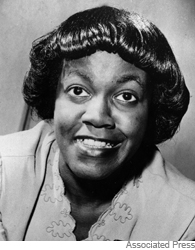
Brooks published her first book of poetry, A Street in Bronzeville (1945), with Harper & Brothers. After a strong show of support from the publisher, and author Richard Wright said to the editors who solicited his opinion on Brooks’ work:
“There is no self-pity here, not a striving for effects. Brooks takes hold of reality as it is and renders it faithfully. She quickly catches the pathos of petty destinies. She hears the whimper of the wounded. She notices the tiny accidents that plague the lives of the desperately poor. She understands the problem of color prejudice among Negroes. [15]“
Brooks was also the first black woman to serve as the Poetry Consultant to the Library of Congress.
Gwendolyn E. Brooks started writing poetry at a young age. She leaves a rich history as a teacher, poet, author, and so much more.
Resource : (Wikimedia Commons) https://en.wikipedia.org/wiki/Gwendolyn_Brooksm?

Finding Your Life Purpose: A Personal Journey
LIFE WITHOUT PURPOSE
What is life without purpose? Some say it is no life at all! Some say it is about living without restrictions and pursuing personal desires. But I can say I do not want to die, never accomplishing the purpose God had when He created me! What is your purpose in life?
Today was a different kind of day for me. I guess it is because It is my BIRTHDAY! As I thought about my life, I took time to look at pictures. Pictures from my twelfth-grade class and I read what my classmates had said about me. It was strange but funny. Most of the boys said I helped them by listening to their problems. The girls indicated I was fun to be around. And had a sense of humor that they hoped I would never lose. Reflecting on these days enabled me to see where the pathway to my purpose began.
Looking for a place for me.
God will take you out of familiar territory. This is to help you face life. It is especially true when it has to do with His purpose. God wanted me to see and grow from surviving the sexual assault. Triggers seemed to come like darts through conversations at the same time. These triggers or conversations are what sent me to therapy. I began to see the profound impact of sexual assault. I had walked into a world that I was not aware of. It is not just statistics. It is a lived experience that alters one entire being. She said, “Darlene, you have a limited understanding of what you can do.”
My therapist kept encouraging me. She went as far as to give me the name of a Crisis Prevention Center near my home. But I was still hesitant “can I really help anyone.” I struggled to stand on my own two feet. I applied anyway and they accepted my application to become a member of Rape Crisis as a volunteer.
I now have twenty-five years of experience in the crisis prevention field. Volunteering is where I embraced my calling to serve.
Empowering Others Through Service
Volunteers would stay with the survivor during the medical exam and police interview. If necessary, volunteers would walk through the entire court process with the survivor. I also joined the speaker’s bureau. I talked to students about sexual assault and how it changes lives. We discussed the effect on communities and the changes that put them at a higher risk than before. I walked victims through their exams and the police questioning. I attended training and took classes whenever I could. By this time, I could not quit even if I wanted to; this is how you feel when you find your purpose.
I left the area where I volunteered. By then, I knew I was to start a ministry that would support the abused. I was not sure how this would play out, but that was the task set before me. I took a leap of faith into my calling and started walking. God opened the next doors for me and will do the same for you:
Thirty professionals and myself penned “And He Restoreth My Soul an Anthology created as a guide for those walking with the sexually abused
Started ministry, Darlene J. Harris; Speaking from the Heart.
Interviewed by The Ventura County-L.A. Times
- Interviewed on the radio with KKLA.
- Developed and spoke at retreats for women.
- Helped to start a domestic violence ministry at my church called “Cura.”
I am not saying that it takes a horrendous act to have a purpose. Rape is an atrocious and vicious act against one’s spirit, body, and soul. But God needed something from the stolen plunder. So, He created it. It was me!
God created you with a purpose. He will reveal it to you in His time and way when He knows you are ready. Prepare yourself for when He speaks to you!
Take a moment and reflect—what passions stir within you, just waiting for you to unleash them?
Resources.
Romans 15:6 so that with one purpose and one voice you may glorify the God and Father of our Lord Jesus Christ.
2 Corinthians 5:5 Now He who prepared us for this very purpose is God, who gave us the Spirit as a pledge.
Ephesians 1:11 In Him we also have obtained an inheritance, having been predestined according to the purpose of Him who works all things in accordance with the plan of His will,
Dancing with the KING: A Life Partner
Are you allowing God to choreograph your Life?
I love the story of Cinderella. Her step-sisters and step-mother mistreat her. They do nothing to ease her pain and continue to demand more from her—a horribly choreographed life! But this is not why I love the story.
STRETCH your IMAGINATIONS
Imagine yourself as Cinderella, a tired, worn-out girl who suffers daily from meaningless chores, day in and day out. As her night draws near, she prepares to retire until there is a knock at the door. She drags herself to the door and opens it. To her surprise, a handsome young man stands at the door wearing a white shirt and pants. He extends His hand to her, saying, “Cinderella, I know you are tired, weak, and weary from living your life. You have lived through many trials in your life. But I have come to give you rest. Will you let me give you rest?” She asks, “How will you do that?” He responds, “Trust me, you will see,” He then takes her hand in His.
STRETCH your IMAGINATIONS
Imagine yourself as Cinderella, a tired, worn-out girl who suffers daily from meaningless chores, day in and day out. As her night draws near, she prepares to retire until there is a knock at the door. She drags herself to the door and opens it. To her surprise, a handsome young man stands at the door wearing a white shirt and pants. He extends His hand to her, saying, “Cinderella, I know you are tired, weak, and weary from living your life. You have lived through many trials in your life. But I have come to give you rest. Will you let me give you rest?” She asks, “How will you do that?” He responds, “Trust me, you will see,” He then takes her hand in His.
She lets him take her hand as they walk down the street named Life. As she tells him her life story, something begins to happen. With every hurt and loss she shares, her dress turns whiter and whiter. While his white shirt and pants turn blacker and blacker.
They come to a beautiful building with lights that seem to be dancing in the air. Inside was grand, and the young man took her hand, bowed, and began to dance. They were the only two there. By this time, her dress is almost as white as snow, and His clothes are continuously changing. She is confused about the change she sees because she has never seen anything like it. She begins to tell him more and more about her life. The more she describes it, the more He starts to look like a Prince.
The beauty of the Dance is magical. With each story she tells, He is starting to look more and more like a KING. He is stunning! He wears a cape adorned with diamonds, rubies, and pearls. It is something she has never seen before. He takes her hand with joy in His heart. Because He knows what The Dance symbolizes: trust, surrender, and connection, which mirrors the relationship He desires with her. He knows a profound sense of confidence will bring peace and joy to Cinderella’s heart and mind.
A dance requires a partner who is willing to follow the partner. A partner is willing to move to the rhythm, trust the steps, and cherish each moment. Dancing is akin to our first steps as children. We stumble, fall, and veer off course, but with our parents’ guidance, we soon learn to walk without falling. Navigating Life’s intricate and complex twists and turns can be managed when the KING is the lead.
The master choreographer is the KING. He knows the right time to turn us around and where we will end up. We do not have to be afraid when dancing with the King and following His lead. He calls us to him with open arms like a partner of the ballerina. We must embrace creativity, curiosity, courage, and trust, ultimately shaping our unique experiences. Every decision contributes to the King’s purpose for our lives.
A Life Partner
Choosing our Life PARTNER
Dancing with the KING paints a picture of His soothing presence. He guides us like a feather blowing in the wind. He leads with a gentle touch, never imposing force, and always stays by our side. HIS guidance and support in this “Dance of Life” reassure us and give us the confidence to take each step.
Just think! With all, He is doing at this very moment in time. He still has His eye on you and me because He is intimately choreographing our journeys. He is the most gracious and gentle partner we will ever have. He empowers us to do His will as we walk through this world.
Again, I ask, “Are you allowing God to choreograph your Life?”
Something went wrong. Please refresh the page and/or try again.

Do you have a question, I might have an answer!